




Are people waiting for products, do packages build up between machines, or does every format change take extra time? Use this custom conveyor checklist to record your required output, downtime and staffing. Start your enquiry with the production problem you want to solve.
A conveyor moves products between workstations or machines. A custom conveyor adapts that connection to your packaging, available space and the infeed required by the next machine.

Choosing a conveyor: what needs to improve?
Do not start with the length of the belt. Describe what goes wrong during a shift and what you want to organise differently. How many products must be ready at the end of the shift? When do people or machines wait? What happens when you change formats?
Uiltje doubled output with the same number of operators. That result belongs to the complete line, not to a conveyor alone. Include infeed with a depalletizer and packing with a casepacker in your enquiry.
More than moving products: temporary storage and automatic speed control
Zomerdijk builds conveyors for cans, glass and PET, as well as boxes. Food and beverage production often involves more than one packaging format. Include all formats in your enquiry, including small batches and packaging you want to add later.
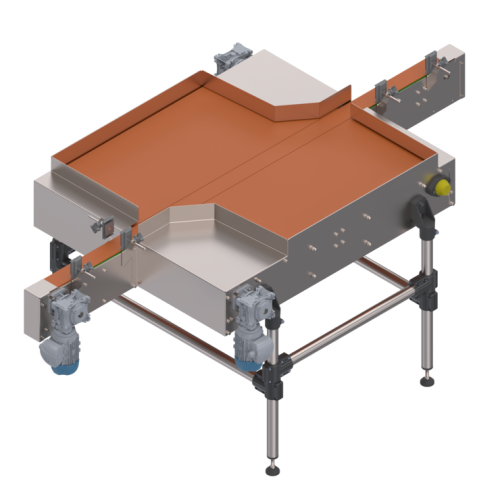
If the next machine stops briefly, products can wait on a buffer table. Record how many products you want to hold and for how long. Conveyors that move in both directions are also available.
We can also automatically adjust conveyor speeds to the needs of the machines. This controls how much product arrives at each point instead of requiring people to keep adjusting speeds. For a production manager, that is an important part of the enquiry: not just how products move, but how the whole line responds to changes.
| What happens during production? | What should your enquiry include? |
|---|---|
| Products need to reach the next machine | Packaging, route and required infeed |
| A machine stops briefly while products keep arriving | Temporary storage capacity and required holding time |
| Products need to move in two directions | Required movement and when the direction changes |
| Demand from the machines changes | Automatic coordination of conveyor speeds and product flow |
Let the core machine set the pace of your conveyor system
A short stop at one machine does not have to stop the entire production line. Start with the machine whose output you want to protect, then coordinate the conveyors and surrounding machines around it. In beer filling, the filler is the core machine in this approach. The aim is to keep it running steadily at the highest rate that meets your product and quality requirements.
Provide a reserve of empty packaging before the filler and space for filled, closed packaging after it. The first buffer helps cover a brief interruption in supply. The second gives downstream machines time to recover without immediately stopping the filler. Conveyor speed control should respond to the filler and the space available in these buffers, rather than simply making every belt run as fast as possible.
Example: change a label roll while the filler keeps running
Imagine a beer bottling line where the labelling machine needs a new label roll. A buffer between the filling and closing equipment and the labeller can temporarily hold the bottles being produced during that change. The same approach can absorb a short interruption at the labeller. The operator has time to resolve it while the filler continues producing.
The available buffer space determines how long this can continue. Measure how many minutes it takes to replace the label roll. Record how many bottles the filler produces per minute. Use these measurements to determine the required buffer capacity. After the restart, the labeller needs enough spare capacity to process the accumulated bottles as well as the bottles still arriving. Otherwise the buffer will not be ready for the next interruption.
For cold beer filling, maintaining a stable filling temperature is also important. A stop can allow the filling process to warm up and increase rejects during restart. Include these restart losses in your assessment, not just the minutes of lost production.
Conveyor choices and OEE: more good products per shift
OEE stands for Overall Equipment Effectiveness. It combines availability, performance and quality: how much of the planned production time the machine runs, how close it runs to its ideal production rate, and how many products are right first time.
Use these three measures to evaluate your conveyor choices. Buffers can reduce waiting time at the core machine. Coordinated speeds can reduce slow running and repeated interruptions. A more stable process can help limit restart rejects. Measure the effect at the core machine and compare good output per shift before and after a change. A faster conveyor alone is not evidence of better OEE.
Checklist for your custom conveyor
Inspect your production line using this checklist. Print this page or copy the questions into your quotation request. Fill in your answers and tick off each completed item.
Production and downtime
- ☐ Product or production run: ____________________
- ☐ Which core machine sets the line pace, and at what production rate? ____________________
- ☐ Required output per shift: __________ products in __________ hours.
- ☐ Actual output per shift: __________ products.
- ☐ Where do people or machines wait? ____________________
- ☐ Measured downtime and cause: ____________________
- ☐ Current staffing and tasks at this connection: ____________________
Packaging and changeovers
- ☐ Packaging: glass / cans / PET / boxes / other: __________
- ☐ Empty or filled during transport: ____________________
- ☐ All formats included, including smaller production runs.
- ☐ Number of format changes per shift: __________
- ☐ Current changeover time: __________; required time: __________
- ☐ Tasks needed during a changeover: ____________________
Production downtime and reliability
- ☐ What should happen when the next machine stops? ____________________
- ☐ Do products need temporary waiting space? How many and for how long? ____________________
- ☐ Does the conveyor need to move in both directions? Why? ____________________
- ☐ Which speeds do people currently adjust manually? ____________________
- ☐ Which machines need their infeed adjusted automatically? ____________________
- ☐ What should happen during stops, restarts or temporarily reduced infeed? ____________________
- ☐ Label-roll change or other short-stop duration to cover: ____________________
- ☐ Available buffer capacity before and after the core machine: ____________________
- ☐ How will the buffer be emptied again after a restart? ____________________
- ☐ Core-machine availability, performance and quality; rejects during restart: ____________________
- ☐ Who responds to a fault? ____________________
- ☐ Required maintenance and support arrangements: ____________________
- ☐ What must a demonstration or test show? ____________________
Preparing the quotation
- ☐ The technical team has added the information listed below.
- ☐ Production and maintenance have checked the required output and working method together.
- ☐ Open questions recorded: ____________________
Custom conveyor FAQ
Can the same conveyor handle glass, cans and PET?
We build transport solutions for glass, cans, PET and boxes. We assess whether all your packaging formats fit the same conveyor for each application. Include every required format in the checklist.
Can you automatically control line speed?
Yes. We can coordinate conveyor speeds around the core machine and the available buffer space. In a beer filling line, this helps protect steady filler output while the surrounding machines respond to changing supply or short stops. Include the required filling rate, buffer time and restart sequence in your enquiry.
How quickly can I change between formats?
Record how often you change formats, which tasks take time now and what you want to see during a demonstration. Include your required changeover time in the quotation request.
What do I need for a first quotation discussion?
The completed production checklist and the technical details below. Include them in your enquiry and tell us which questions remain open.
For the technical team
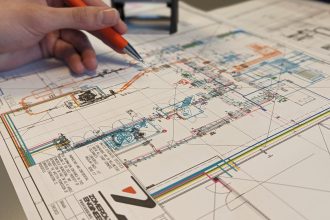
Record diameter, height and weight for each product. Include a layout showing the conveyor route and connection heights, plus photos of infeed, outfeed and machines. Describe the cleaning method, moisture, product residue and maintenance access.
Applications include cans, glass, PET and boxes. Options include buffer conveyors, accumulation tables, bidirectional conveyors and full line control with automatic speed regulation.
For control integration, also supply the available machine signals and the required stop and restart sequence. Specify speed, load, buffer capacity, compatibility with existing machines and cleaning requirements in the quotation.
Explore Zomerdijk Engineering’s conveyors as a starting point for your enquiry.


